|
Dr. Emily E McMahan
|
Changes in your hearing can be easy to overlook, particularly when they happen gradually. At first, you may simply notice that certain sounds aren’t as clear as they once were, or you may find yourself asking people to repeat themselves more often.
For years, we’ve understood that hearing challenges impact your quality of life; they can lead to frustration, fatigue, and even social withdrawal. Now, a major global health authority has officially recognized another important connection: the link between untreated hearing loss challenges and cognitive decline.
The World Health Organization (WHO) has recently updated its dementia risk-reduction guidelines to recognize the importance of managing hearing health as part of a broader strategy to reduce the risk of cognitive decline and dementia.
Understanding the Brain-Hearing Connection
Think of your brain as a busy command center, constantly processing information from your senses to help you understand and navigate the world around you. When you experience hearing difficulties, even mild ones, the sound reaching your brain may be incomplete, meaning your brain has to work harder to fill in the gaps.
That extra effort increases the mental load involved in everyday listening. Over time, this can leave you feeling mentally drained after conversations and social interactions, particularly in noisy environments where your brain has to work even harder to separate speech from background sounds.
When conversations become difficult to follow, you may start avoiding social situations, which can lead to less interaction and fewer opportunities to stay connected with the people around you.
Since social isolation is also recognized as a risk factor associated with dementia, addressing hearing difficulties is an important proactive step toward maintaining social connection and supporting overall brain health.
What the New WHO Guidelines Mean for You
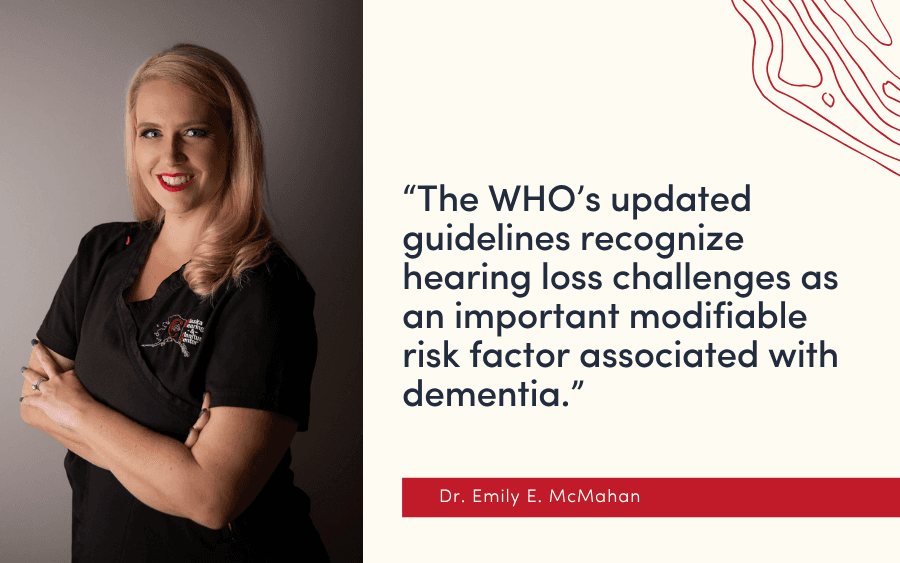
The WHO’s updated guidelines recognize hearing loss challenges as an important modifiable risk factor associated with dementia.
This doesn’t mean that managing your hearing health can prevent dementia or Alzheimer’s disease. Rather, the evidence suggests that addressing hearing challenges can reduce the mental effort required to follow conversations and make it easier to stay socially connected, both of which can support overall well-being and healthy brain function.
Trust in Expert Care That Puts You First: Your Next Steps
If you’ve noticed changes in your hearing or simply want to be proactive about your cognitive health, a professional hearing evaluation is a good place to start.
A comprehensive hearing assessment is a thorough diagnostic process that evaluates the specific type and degree of any hearing loss challenges you might be experiencing. You will be checked for your ability to hear different pitches and your capacity to understand speech in noisy environments.
Contact our team at Alaska Hearing and Tinnitus Center today to schedule an appointment or request a callback and take the first step to protecting your long-term hearing and cognitive health.
Frequently Asked Questions (FAQs)
Q: Should I schedule an assessment even if my hearing changes seem minor?
A: Yes. Hearing difficulties often develop gradually, so it’s easy to overlook the early signs. You might find yourself turning the TV up a little louder or missing parts of conversations, especially when there’s background noise.
A hearing assessment can identify subtle changes that you may not have noticed yourself. It also provides a useful baseline for monitoring your hearing over time and can help identify common causes of hearing difficulties, such as earwax buildup or fluid in the middle ear.
The earlier you understand what’s happening with your hearing, the sooner you can take the right steps to protecting your hearing health and staying connected.
Q: How often should adults have their hearing checked?
A: Every adult can benefit from a baseline hearing assessment, especially as they get older or if they have a history of noise exposure.
After that, our audiologists can recommend an appropriate schedule for ongoing monitoring, based on your results and individual risk factors. You should arrange an assessment sooner if you notice changes in your hearing or difficulty following conversations.
Q: Do hearing loss challenges mean I will develop dementia?
A: No, experiencing hearing difficulties does not mean that you will develop dementia.
However, untreated hearing difficulties are considered a modifiable risk factor for cognitive decline, which means that addressing them may reduce listening strain, support social engagement, and contribute to better overall brain health.
Sources: