|
Dr. Emily E McMahan
|
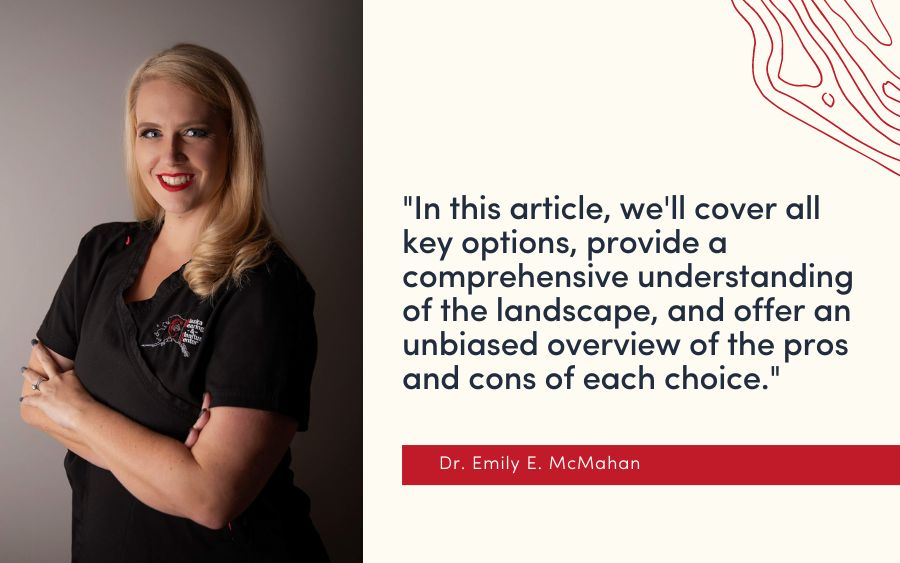
If the time has come where you or a loved one is considering which treatment is best to manage a hearing loss, then this article will give you all the answers you need in order to make the best choice.
With so many marketing messages from different providers promising the world, it can be really tough to decipher what’s real and what’s emblazoned hype, which may leave you feeling overwhelmed and longing for an easy-to-digest, fact-based list!
That’s why, in this article, we’re going to explain ALL the key options available to you and give you a full understanding of the landscape, as well as share an honest and unbiased overview of the benefits and negatives of choosing each option.
Questions To Ask Yourself Before You Start Your Search
When it comes to a hearing challenge, there isn’t a “one-size-fits-all” solution to addressing it.
The right option is very much dependent on your unique circumstances, lifestyle, and budget.
Ask yourself these questions:
There is a lot to consider but when armed with an understanding of your preferences, you can make a better decision on which of the many options available is right for you.
The Full List Of Hearing Loss Treatments In Alaska
There are many options to choose from, ranging from low-budget to high-budget depending on your preferences and circumstances. They include:
1. Earphones and Cell Phone Apps [$0-$250]
2. Over-the-Counter Hearing Aids [$800-$1000]
3. PSAPs (Personal Sound Amplification Products) [$79-$1250]
4. Online Hearing Aids with Audiological Remote Support [$1850-$2400]
5. Big Box Retail Stores [$1250-$4000]
6. Audiology Clinic [$2500-$7800]
7. Hearing Loss Surgery (Cochlear Implants) [$30,000-$50,000]
Although they all hold similar promises, they all have very distinct differences. Let’s explore each option in more detail.
#1 – Earphones And Cell Phone Apps
If you have zero budget and simply need some form of amplification in certain environments, then there are a few apps on Apple’s App Store that allow you to turn your earphones into amplification tools.
Essentially, they use the microphone of the device and then increase the volume on all sound, giving you an increased ability to hear. One notable app is called “Chatable” – it’s free to download and allows you to simply increase the level of volume on all sounds that your cell phone/earphones pick up.
In order for this app to work, you must have wireless earphones or wired headphones connected to your cell phone.
You can then sit your cell phone on the table to help you hear conversations better, with the elevated volume being pumped into your ears.
It offers 99 minutes of free listening per month, and then it asks you to sign up to a subscription of $59.99 per year.
Pros:
Cons:
This could be compared to using a magnifying glass if you had vision problems. It may help in very specific circumstances but is not a solution that will allow you to live your life comfortably or address the core challenge.
#2 – Over-The-Counter Hearing Aids
In 2017, the federal government passed the Over-the-Counter Hearing Aid Act, which aimed to give consumers greater access to affordable hearing aids. After many false starts, these devices are now slowly reaching the market.
The first big-brand device was the Bose SoundControl priced at $850.00 that delivered two devices for each ear, an iPhone app, and a 90-day return policy.
These devices can be purchased without any form of hearing assessment; you fit them yourself, and you then use an app on your phone to select specific environments and make tweaks to the sound.
In many ways, they’re very similar to the earphones and cell phone app option that we recently discussed, but they supply you with devices that look very similar to traditional hearing aids.
Already, Bose is advertising these devices to the wider world, and it’s resulting in many people asking questions about them.
You can read our professional take on the Bose SoundControl devices by clicking here.
Pros:
Cons:
To continue the comparison to your vision, this is the equivalent to buying off-the-shelf readers. They will help in certain situations, but overall, they are a very generic option that isn’t unique to you.
#3 – PSAPs (Personal Sound Amplification Products)
If you have seen the hearing aid-type devices for sale on the internet, through adverts, or even in Walmart, then the chances are that it’s a PSAP, which is an amplification tool.
It takes in sound through a small built-in microphone and then makes it louder into your ears, helping you to hear the sounds around you.
Starting as low as $79.99 and ranging to over $1000 – they provide a solution if you have a very mild hearing loss and require a “one-size-fits-all” amplification with very little room for adjustments.
Pros:
Cons:
If you’re experiencing challenges with your sight, then these are the equivalent to readers – they help in certain situations but aren’t tailored to you, nor a long-term solution.
#4 – Online Hearing Aids With Audiological Remote Support/Direct-To-Consumer
You may have seen adverts from Listen Lively or other popular online models that share how you can access hearing technology and audiological support online, and they make a great case.
You don’t have to visit a doctor, they’re reasonably priced, and the process feels very slick.
They serve as a solution to match commonly used gain and slope hearing loss targets, usually allowing you to connect to a cell phone app to make minor adjustments yourself or through a video call with one of their online audiologists.
They’re gaining in popularity due to their convenience, with online reviews being mixed between good and poor experiences.
You can order them for as low as $1850, and you receive a box with your hearing aids programmed based on your online hearing assessment with online follow-up appointments.
Pros:
Cons:
This is definitely a good option depending on your level of hearing loss, circumstances, and needs. If we continue the comparison to eye glasses, then this would be the equivalent to completing an eye test at home on your own and then having a company mail you your eye glasses.
#5 – Big Box Retail Stores (Costco/Sam’s Club, Etc.)
A common option for purchasing professional hearing aids is to visit your local Costco or Sam’s Club that often has an internal hearing aid center.
If purchasing real hearing technology that is customized to you is important to you, then this is a big step in the right direction compared to purchasing online.
Firstly, they require you to have a hearing screening to understand the rough level of your hearing loss.
They then have access to their own Kirkland branded hearing aids plus some reputable manufacturer technology, which ranges in price in the low thousands of dollars mark.
The technology is high quality, and you receive a professional fitting (often by a trained hearing aid dispenser), plus a warranty that varies from 1 to 3 years depending on where you purchase.
It is in a retail environment, so receiving follow-up care and support can sometimes be tricky with people waiting wee